- Home
- In The News
- blog
- How Much Fat is in Whole...
- Share
-

-

-

-

-

-

How Much Fat is in Whole Milk? Whole, 2%, Low-Fat, and Skim Milk Explained
Walking down the dairy aisle in the grocery store can be a bit confusing with all the milk types available. With the new Dietary Guidelines for Americans now recommending all dairy milk fat types, including whole milk, more people are asking: What’s really the difference between whole milk, 2% milk, low-fat milk, and skim milk? This guide will clear everything up for you and help you pick the best dairy milk for you and your family.
Key Takeaways
- All milk fat percentages are recommended by the Dietary Guidelines for Americans and have the same core 13 essential nutrients, including protein.
- Whole milk contains 3.25% milk fat, 2% has 2%, low-fat has 1%, and skim milk has less than 1%.
What All Dairy Milk Has in Common
All dairy milks include the same 13 essential nutrients, including 8 grams of protein, calcium, vitamin D, vitamin A, phosphorus, vitamin B12, niacin, riboflavin, pantothenic acid, potassium, iodine, selenium, and zinc. You can learn more about milk’s nutrients here.
The differences between the milk fat types are the amount of milk fat included and the calories. Choosing the right milk for you depends on your personal health goals, activity levels, and taste preferences.
Whole Milk
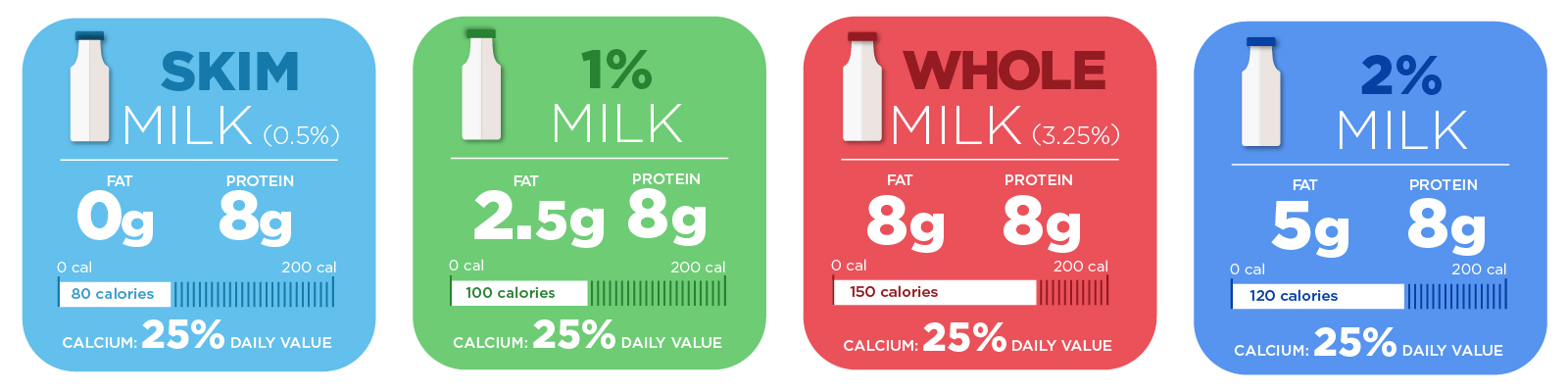
Whole milk does not mean 100% milk fat. In fact, whole milk only contains 3.25% milk fat! It’s the fullest, creamiest option with the most indulgent taste. It also has 150 calories and 8 grams of protein per serving.
2% Milk
2% milk contains, as the name implies, 2% milk fat. It’s the most balanced option with a rich taste but less fat than whole milk. It has 120 calories and 8 grams of protein per serving.
Low-Fat Milk
Low-fat milk has 1% milk fat. It has a lighter taste and texture than whole and 2% milk. It has 100 calories and 8 grams of protein per serving.
Skim Milk
Skim milk has less than 1% milk fat. This is the perfect choice for those who want to reduce fat in their diet but still want all of milk’s nutritional benefits. It has 80 calories and 8 grams of protein per serving.

How Different Milk Fat Percentages Are Made
Adjusting the milk-fat percentage is a simple process that does not involve diluting the milk with water. Instead, it happens before homogenization begins. Homogenization is a process where the milk is shaken up, giving it its rich, white color and smooth texture. Before homogenization, a layer of cream rises to the top. This cream is sometimes skimmed off before it mixes with the rest of the milk. The final milk fat type depends on the amount of cream that is added back in.
All milk fat types can fit into a healthy diet and are recommended by the new Dietary Guidelines for Americans, and all include the same 13 essential nutrients. So, whether you choose whole milk, 2%, low-fat, or skim milk for you and your family, you can feel confident knowing you’re getting the nutrition dairy milk provides while selecting the option that best fits your taste preferences, lifestyle, and health goals.